






Why Is a Wire Mesh Cable Tray Ideal for High-Density Cable Management?
Release time: 2026-09-01
Table of Contents
As electrical and communication systems become more densely installed, cable management has become increasingly important in data centers, office buildings, commercial complexes, and industrial facilities. A crowded cable route needs more than simple support. It also needs good ventilation, convenient installation, easy inspection, and enough flexibility for future changes. This is why a Wire Mesh Cable Tray is becoming a practical option for modern high-density cable management.
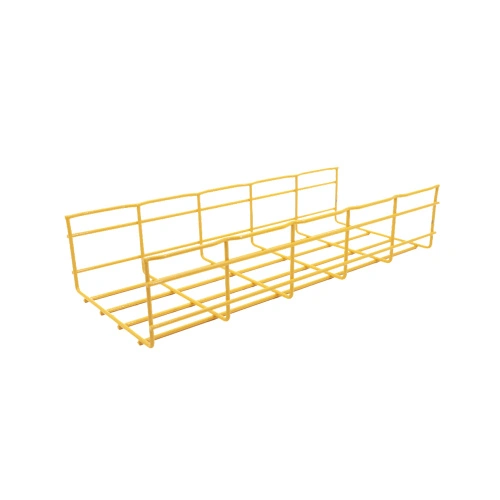
Unlike enclosed cable support systems, a wire mesh design leaves most of the tray open. Cables remain visible and surrounded by air, while installers can adjust cable routes without dealing with complicated prefabricated fittings. For projects where flexibility and accessibility matter, this structure can simplify both initial installation and future maintenance.
Why Does High-Density Cabling Need Better Ventilation?
Network cables, optical fibers, power cables, and weak-current cables can generate or retain heat during operation. When a large number of cables are concentrated in a limited space, restricted airflow may cause heat to accumulate around the cable bundle.
The open structure of a wire mesh tray helps address this issue by allowing air to contact cables from multiple directions. The product uses an approximately 80%–90% hollow mesh structure, providing extensive ventilation around the cable route. This can be particularly useful in computer rooms and data center environments where cable density is high and maintaining suitable operating conditions is important.
The ventilated structure also avoids creating a completely enclosed space around the cables. As a result, cable routes can remain open and accessible while supporting effective heat dissipation.
How Does a Basket Cable Tray Improve Installation Flexibility?
A basket cable tray is another common term for a wire mesh cable tray. Its welded wire construction provides a lightweight framework that can accommodate different cable routes without requiring every change in direction to be prepared in advance.
For complicated installations, contractors can cut, bend, or branch the tray on site using ordinary cutting equipment. Cables can also enter or leave the tray at different positions. This flexibility can be valuable when the actual cable route needs to be adjusted during construction.
It also helps when an electrical system expands later. Additional cables can often be routed through the existing support structure without completely dismantling the cable tray system. This makes the design particularly suitable for facilities where network infrastructure, monitoring systems, or communication equipment may be upgraded over time.
Can a Lightweight Cable Tray Reduce Installation Work?
Weight is another important consideration, especially for ceiling-mounted cable management. According to the product specifications, this wire mesh design can weigh around 30%–50% less than comparable steel ladder or perforated trays of similar specifications.
A lighter structure can make transportation and handling easier during installation. It can also be useful in locations such as light steel keel ceilings, raised computer room floors, and light steel structures where reducing additional structural loading is an important consideration.
However, tray selection should still be based on the actual cable load, support spacing, installation method, and structural requirements of the project. Lightweight construction does not mean that load calculations can be ignored.
How Do Snap Connectors Make Installation Faster?
Traditional cable tray connections may require multiple bolts and tools, which can increase installation time, particularly when work is performed at height.
The Wire Mesh Cable Tray system can use matched metal snap-on connectors to join tray sections. Instead of relying on numerous individual bolts, installers can connect sections more efficiently while maintaining a continuous cable route.
This approach can simplify ceiling installation and reduce repetitive fastening work. For large projects with extensive cable routes, even small improvements in connection speed can have a noticeable effect on overall installation efficiency.
The system can also be combined with accessories such as vertical elbows, horizontal elbows, reducers, hanging brackets, support arms, and separating partitions, allowing the cable route to be adapted to different project layouts.
Why Is Cable Visibility Important for Maintenance?
One of the less obvious advantages of an open mesh tray is visibility. Cables, identification labels, and potential fault points remain visible without removing a cover.
This can make routine inspections more convenient. Maintenance personnel can check cable routing, identify individual circuits, and access specific cable sections without opening an enclosed tray. In computer rooms and communication environments, the transparent structure can also simplify infrared temperature checks and troubleshooting.
For facilities that frequently add, remove, or reorganize cables, this accessibility can be particularly valuable.
Which Materials Are Available?
The appropriate material depends on the operating environment and project requirements. The product can be supplied in pre-galvanized steel, hot-dip galvanized steel, 304/316 stainless steel, and aluminum alloy.
Galvanized steel can provide a practical balance between structural performance and corrosion protection for many electrical installations. Stainless steel may be considered for environments where higher corrosion resistance is required, while aluminum offers a lightweight alternative for applications where reducing system weight is important.
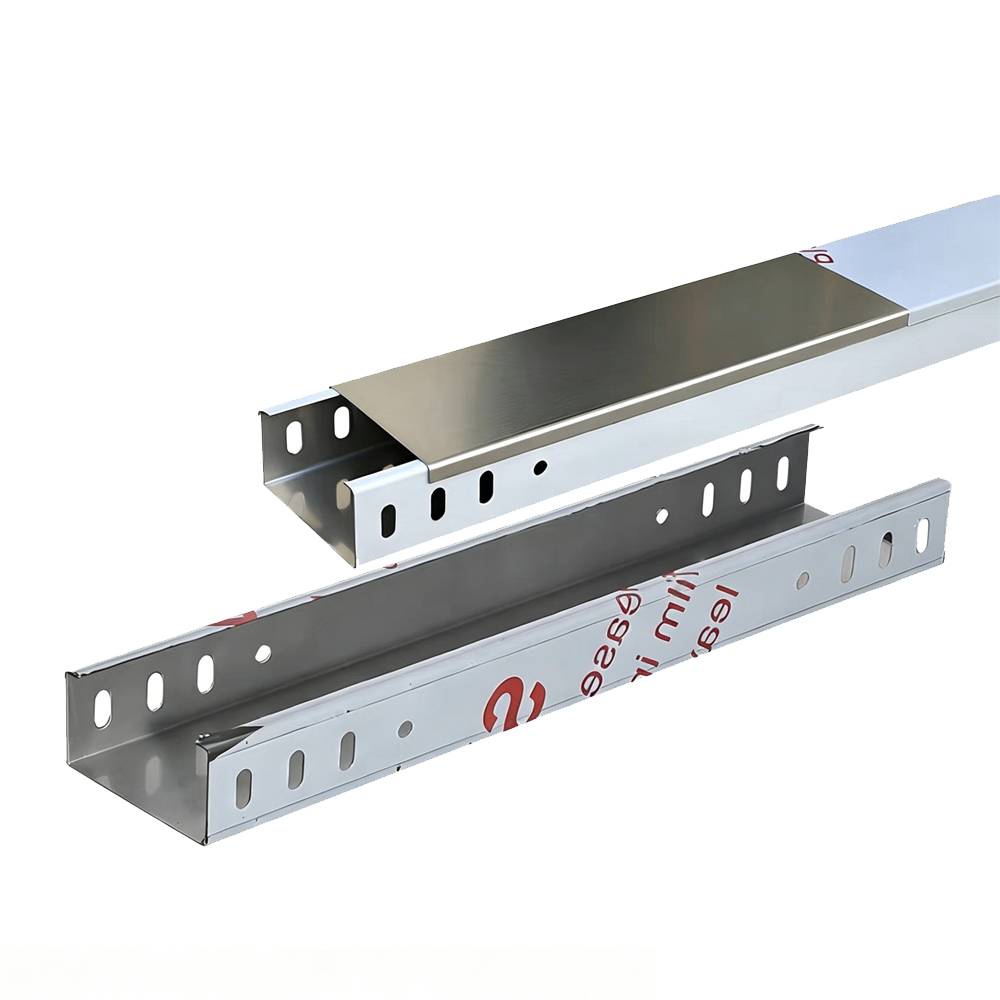
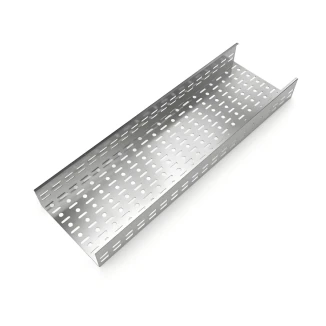
It is also worth distinguishing metal wire mesh systems from other cable management solutions such as a Polyurethane Cable Tray. Polyurethane-based systems may serve different requirements depending on their construction and application, so they should not automatically be treated as equivalent to a welded steel or aluminum mesh tray.
Where Can Wire Mesh Cable Trays Be Used?
A Wire Mesh Cable Tray is particularly suitable for applications where cable density, ventilation, accessibility, and future modifications are important. Data centers and computer rooms are natural applications because network and communication cables often require organized routing with good visibility and airflow.
The same concept can also be applied in office buildings, commercial complexes, intelligent building projects, monitoring systems, network installations, and fire signal cable management. Separating partitions can further help organize strong-current and weak-current cables within the overall cable management system.
For each project, the required width, height, material, support method, cable load, and accessories should be selected according to the actual installation conditions.
Choosing a Wire Mesh Cable Tray for Your Project
A suitable cable tray should match both the current cable installation and its expected future requirements. Available widths for this system include 50, 100, 150, 200, 300, 400, and 600 mm, while standard heights include 30, 50, and 100 mm. Tray lengths can be supplied in 2 m or 3 m sections.
Rather than choosing a tray based only on cable quantity, engineers and installers should also consider cable arrangement, support spacing, environmental exposure, installation height, maintenance access, and future expansion.
For high-density communication and weak-current installations, the combination of open ventilation, lightweight construction, flexible routing, and quick connection makes the Wire Mesh Cable Tray a practical cable management solution.
FAQ
Is a Wire Mesh Cable Tray the same as a basket cable tray?
Yes. Wire mesh cable tray is commonly referred to as a basket cable tray because of its open, basket-like welded mesh structure.
Why is a wire mesh tray suitable for data centers?
Its highly open structure promotes airflow around cables while keeping cable routes visible and accessible, which can be useful for high-density network and communication installations.
Can a Wire Mesh Cable Tray be modified on site?
Yes. The mesh structure can generally be cut and adjusted on site, allowing installers to create branches or adapt cable routes without relying entirely on prefabricated fittings.
What materials are available for this type of cable tray?
Common options include pre-galvanized steel, hot-dip galvanized steel, 304/316 stainless steel, and aluminum alloy. The appropriate choice depends on the project environment and performance requirements.