






How Does a Long Span Cable Tray Reduce Supports in Large Industrial Cable Routing?
Release time: 2026-09-15
Table of Contents
Large industrial facilities often require cable management systems capable of carrying substantial cable loads across long distances. In power plants, manufacturing workshops, substations, utility tunnels, and other large-scale projects, the challenge is not only how to organize cables but also how to build a stable support system without installing excessive numbers of brackets. A Long Span Cable Tray provides a practical approach by allowing cable routes to cover longer distances between supports while maintaining structural stability.
Compared with conventional cable support systems that may require relatively frequent brackets, a long-span design can help simplify installation in large spaces. This makes it particularly useful where cables need to cross high ceilings, wide production areas, or extended utility corridors.
Why Do Large Industrial Projects Need Long-Span Cable Support?
Cable routes in industrial facilities can extend for hundreds of meters, connecting electrical rooms, transformers, distribution equipment, production machinery, and other systems. Installing support brackets at short intervals can increase both material consumption and installation labor, especially when cable trays are positioned several meters above the floor.
Long-span systems are designed to address this challenge. By increasing the distance between supporting points, they can reduce the number of brackets required along a cable route. Fewer supports can mean fewer installation operations, which can be particularly valuable in high-ceiling workshops and large infrastructure projects.
However, a longer support span does not simply mean placing a standard tray farther apart. The tray structure, cable load, material, dimensions, and support configuration all need to work together to provide the required stability.
How Does a Long Span Cable Tray Handle Heavy Cable Loads?
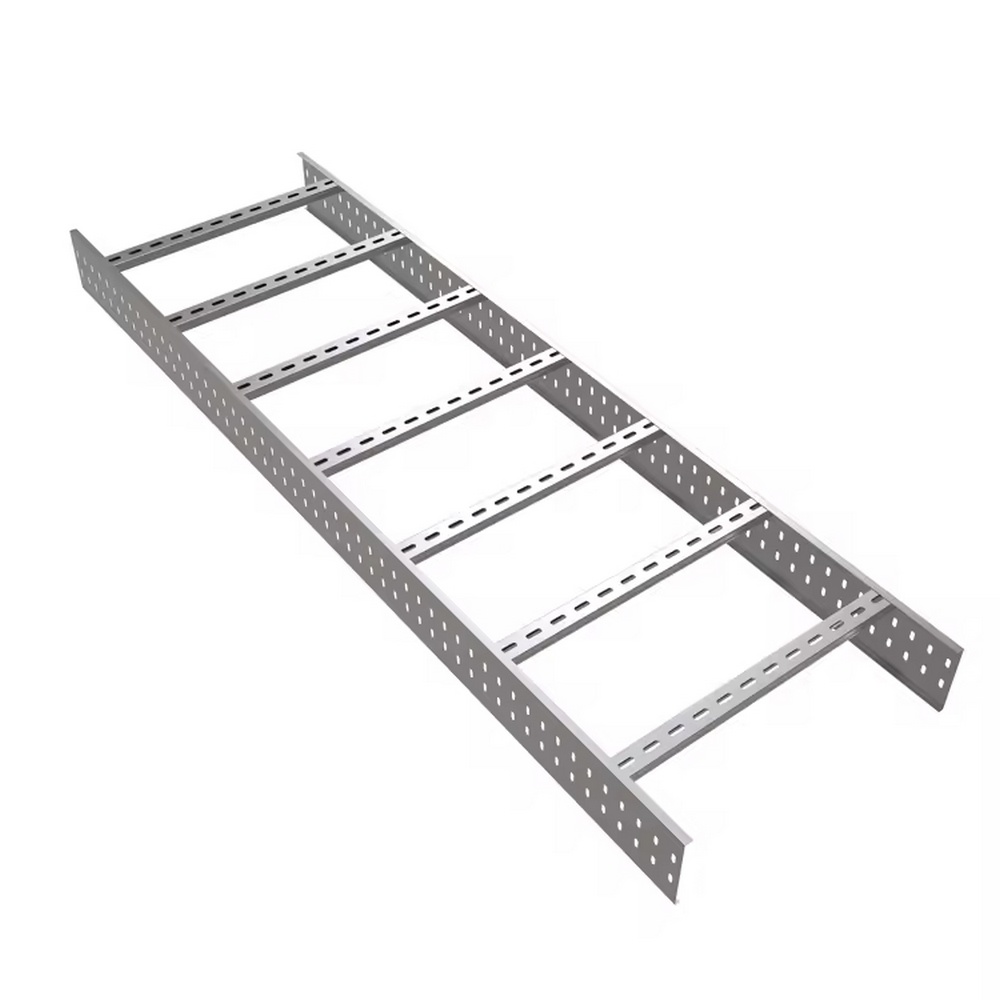
A Long Span Cable Tray typically uses reinforced side rails and regularly spaced rungs to create a rigid supporting structure. The side rails provide the primary longitudinal support, while the rungs maintain the tray geometry and provide convenient contact points for cable arrangement and securing.
This structure is especially suitable for applications involving large-section power cables. High-voltage and low-voltage power cables can be considerably heavier than communication or control cables, so the cable management system needs sufficient mechanical strength for the expected load.
The actual load capacity depends on factors such as tray width and height, material thickness, support spacing, cable weight, and installation conditions. For this reason, engineers should select the appropriate tray configuration according to the project requirements instead of assuming that every long-span tray has the same load capacity.
Why Choose a Ladder Type Cable Tray for Long-Distance Routing?
A Ladder Type Cable Tray has an open structure consisting primarily of two longitudinal side rails connected by transverse rungs. Unlike a solid-bottom tray, it does not require a continuous metal base, which can reduce material usage while keeping the cables securely supported.
This design is well suited to long-distance power cable routing because cables can be placed, inspected, and adjusted from the open top. When additional cables need to be installed during a project expansion, maintenance personnel can access the existing route without removing a large solid cover or dismantling the entire support system.
The open structure can also make cable separation and visual inspection easier. For large industrial projects where cable routes may continue to change over time, this accessibility can reduce maintenance difficulties.
Another benefit is installation flexibility. Ladder-style trays can be combined with elbows, tees, reducers, splice plates, brackets, and other accessories to create horizontal and vertical cable routes. This modular approach allows the system to adapt to different building layouts while maintaining a continuous cable support path.
How Can Long-Span Installation Reduce Project Costs?
One of the most practical advantages of long-span cable management is the potential reduction in support components. If the required design permits greater spacing between supports, fewer brackets, threaded rods, hangers, or structural attachments may be needed along the same cable route.
This can influence more than material purchasing costs. Every additional support point requires positioning, lifting, fastening, and inspection during installation. In high-ceiling industrial buildings, these operations can also require additional access equipment and working time.
A well-planned long-span system can therefore contribute to a more efficient installation process. The overall project cost should still be evaluated based on the complete system, including tray dimensions, accessories, support structures, labor, and environmental requirements.
When Is a Stainless Steel Ladder Cable Tray the Better Option?
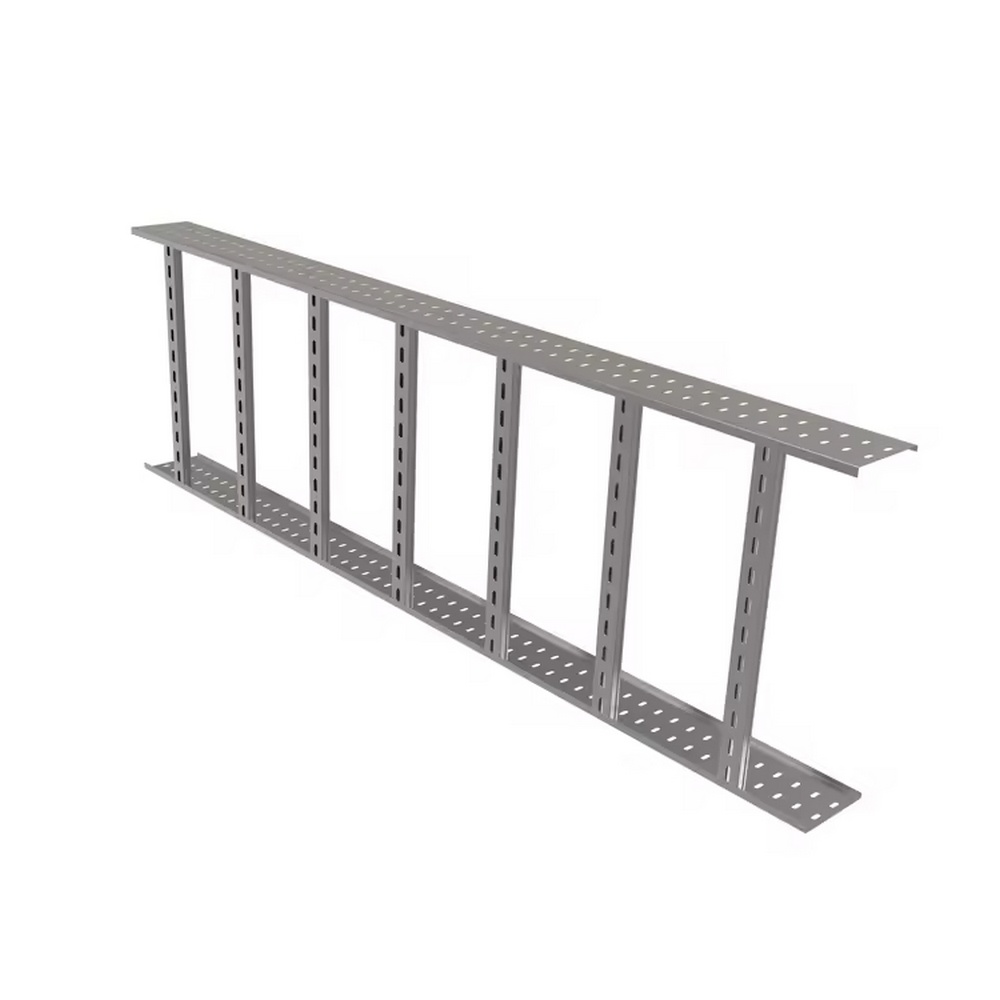
Material selection becomes especially important when cable trays are installed in environments exposed to moisture or corrosive substances. A Stainless Steel Ladder Cable Tray can be considered for projects where improved corrosion resistance is a priority.
Stainless steel ladder trays are particularly relevant to coastal facilities, chemical plants, wastewater treatment facilities, docks, and offshore or marine-related projects. In these environments, humidity, salt exposure, chemicals, and other corrosive factors may place greater demands on cable support systems.
For less aggressive environments, galvanized steel can provide a cost-effective solution, while aluminum can be considered where lower weight is important. The most suitable material should always be selected according to the actual environmental conditions and project specifications.
What Should You Consider Before Choosing a Long Span Cable Tray?
The required cable load should be established first. This includes considering the number, size, and weight of cables that will occupy the tray. Tray width and height should then provide sufficient space for the planned cable arrangement and potential future expansion.
Support spacing is another critical factor. A longer span can reduce the number of supports, but the spacing must remain compatible with the tray’s structural characteristics and expected loading conditions. Material thickness, tray dimensions, installation height, and environmental exposure should also be evaluated.
For projects involving heavy power cables, selecting a tray simply because it is described as “long span” is not enough. The complete tray and support system should be matched to the actual engineering requirements.
A Practical Choice for Large-Scale Cable Routing
A Long Span Cable Tray can provide an efficient solution for industrial projects where long cable routes, heavy cable loads, and reduced support requirements are important. Its reinforced structure can support demanding applications while helping simplify installation across large spaces.
Combined with the accessible structure of a Ladder Type Cable Tray, long-span cable management can provide flexibility for cable installation, inspection, maintenance, and future expansion. Where corrosion resistance is a major concern, a Stainless Steel Ladder Cable Tray offers another material option for demanding industrial and coastal environments.
By considering cable load, span requirements, material, installation conditions, and future capacity together, engineers can develop a cable management system that balances structural performance with installation efficiency.
FAQ
What is a Long Span Cable Tray?
A Long Span Cable Tray is a cable support system designed to maintain structural stability across relatively long distances between support points. It is commonly used in large industrial and infrastructure projects.
What types of cables are suitable for a ladder cable tray?
Ladder trays are particularly suitable for power cables, including large-section high-voltage and low-voltage cables. They can also be used for other cable types when the tray dimensions and load capacity meet project requirements.
Does a longer span always mean lower installation costs?
Not necessarily. Longer support spacing can reduce the number of brackets and installation points, but the final cost also depends on tray size, material, cable loading, structural requirements, and installation conditions.
When should stainless steel be selected for a ladder cable tray?
Stainless steel is worth considering when the cable tray will be exposed to moisture, salt, chemicals, or other corrosive conditions. Coastal, marine, chemical, and wastewater facilities are common examples.