






Stainless Steel vs Galvanized Cable Tray: Which Performs Better in Harsh Environments?
Release time: 2026-10-02
Table of Contents
When cable trays are installed in demanding environments, material choice can make a noticeable difference over time. Moisture, salt spray, chemicals, temperature changes, and outdoor exposure can all accelerate corrosion, especially when metal surfaces remain exposed for years. That is why comparing stainless steel and galvanized cable tray options is more than a matter of price. The right choice depends on where the tray will be installed and how much environmental stress it will face.
For many commercial and industrial projects, galvanized steel provides a practical balance between corrosion protection and cost. Stainless steel, on the other hand, becomes more attractive when the installation is exposed to persistent moisture, salt, or aggressive substances. Looking at corrosion resistance, maintenance, outdoor durability, and total project cost can make the decision much easier.
How Does the Installation Environment Affect Cable Tray Performance?
The environment around a cable management system often determines how quickly corrosion develops. A tray installed inside a dry electrical room faces very different conditions from one installed outdoors near the coast or inside an industrial processing facility. Humidity, rain, airborne salt, chemicals, and pollution can all increase the corrosion risk.
For this reason, choosing a cable tray for harsh environments requires more than checking the tray size and load capacity. Project teams should first understand the actual exposure conditions. Is the tray constantly exposed to rain? Is salt present in the air? Could chemicals settle on the surface? Will cleaning agents or industrial gases come into contact with the tray? Answering these questions helps narrow down the most suitable material before cost becomes the main consideration.
How Does Galvanized Cable Tray Perform in Industrial Applications?
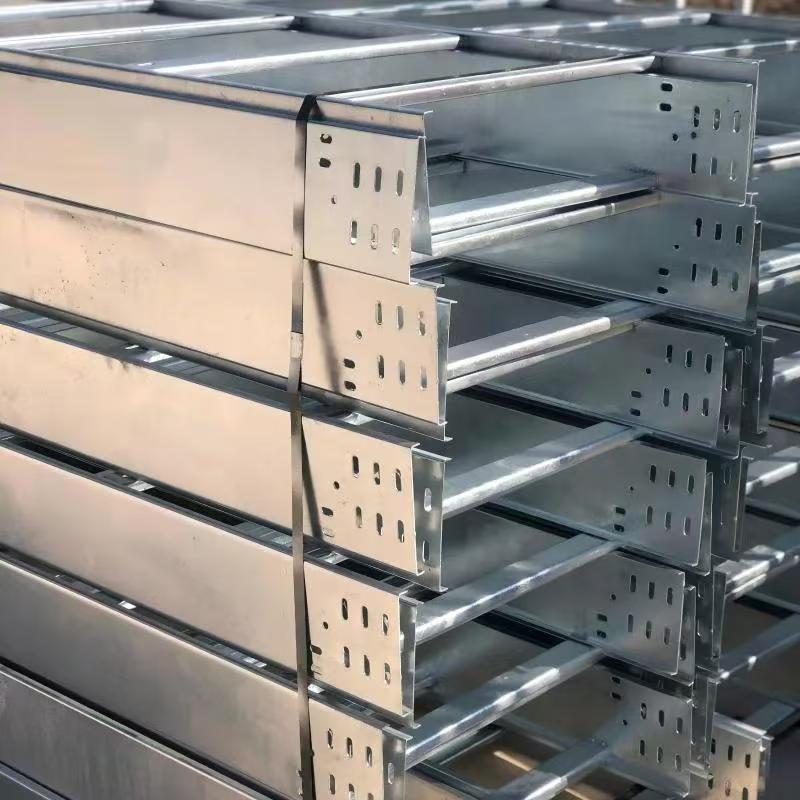
A galvanized cable tray uses a zinc coating to protect the underlying steel from corrosion. This makes galvanized steel a common choice for commercial buildings, factories, equipment rooms, warehouses, and many general industrial installations. It can provide reliable protection where the environment is not continuously exposed to severe corrosive conditions.
Another advantage is its balance between performance and project cost. Large cable routing systems may require substantial quantities of tray, fittings, and supports, so material cost can have a significant effect on the overall budget. Galvanized options can therefore be attractive when the project needs reasonable corrosion protection without moving to a higher-cost material.
However, galvanized steel should not automatically be treated as the best option for every outdoor or industrial application. Coating quality, exposure level, installation conditions, and maintenance expectations all matter. In environments with persistent salt spray or aggressive chemicals, a more corrosion-resistant material may provide better long-term performance.
Why Is Stainless Steel Suitable for More Corrosive Conditions?
Stainless steel offers a different approach to corrosion resistance because its protective performance comes from the properties of the material itself rather than from a surface coating alone. This makes stainless steel an attractive option for environments where moisture and corrosive exposure are difficult to avoid.
A stainless steel cable tray can be considered for coastal facilities, chemical-related environments, food-processing areas, wastewater facilities, and other locations where long-term exposure could create significant maintenance concerns. Stainless steel is also useful when keeping the cable management system in good condition over an extended period is more important than minimizing the initial purchase price.
That does not mean every stainless steel tray is suitable for every corrosive environment. Different stainless steel grades offer different levels of resistance, and the specific substances present at the installation site should be considered. For projects with unusual chemical exposure, selecting the appropriate stainless steel grade is just as important as choosing stainless steel itself.
Stainless Steel vs Galvanized Cable Tray: Which Resists Corrosion Better?
When the environment becomes more demanding, the difference between stainless steel and galvanized steel becomes easier to see. Galvanized steel relies on its zinc coating to protect the steel underneath. As long as the coating remains effective, it can provide dependable corrosion protection for many applications. However, severe or continuous exposure can place greater demands on the coating.
Stainless steel generally has an advantage where moisture, salt, or corrosive substances are present for long periods. This is especially relevant in coastal locations, chemical processing areas, and other applications where replacing a cable tray later would be difficult or disruptive. At the same time, stainless steel may be unnecessary for a dry indoor project where galvanized steel already provides sufficient protection.
The better material, therefore, depends on the severity and type of exposure. Instead of asking which material is universally better, it is more useful to ask which one provides the right level of protection for the actual installation.
What About Outdoor and Coastal Cable Tray Applications?
Outdoor cable routing introduces several factors that are less significant indoors. Rain can keep metal surfaces wet for extended periods, while sunlight and temperature changes can create repeated expansion and contraction. In coastal areas, airborne salt can make the environment even more challenging because salt deposits can accelerate corrosion.
For moderate outdoor conditions, galvanized cable tray can often provide a practical solution when the coating and specification are appropriate for the expected exposure. In more demanding coastal or corrosive environments, stainless steel may offer a stronger long-term option. The decision should also consider whether the tray is sheltered or fully exposed, how frequently it will be inspected, and how easy it would be to replace later.
This is where project-specific evaluation becomes valuable. Two outdoor projects may look similar on paper but have very different corrosion risks depending on their location, surrounding industry, weather, and maintenance conditions.
Does Stainless Steel Cost More Than Galvanized Steel?
Initial purchase price is usually one of the clearest differences between stainless steel and galvanized steel. Stainless steel generally requires a higher upfront investment, while galvanized steel can be more economical for large-scale cable management systems.
However, purchase price is only one part of the overall project cost. If a tray is installed in a difficult-to-access location, corrosion-related maintenance or replacement can involve significant labor and downtime. In such cases, the additional investment in a more corrosion-resistant material may make sense over the long term.
On the other hand, using stainless steel in a relatively mild indoor environment may add unnecessary cost without providing a meaningful practical benefit. The goal should not be to choose the most expensive material, but to match material performance with environmental requirements. This approach can help control both initial costs and future maintenance expenses.
Which Cable Tray Material Is Right for Your Project?
A simple comparison can help project teams make an initial decision:
| Project Condition | Recommended Option | Main Reason |
| Dry indoor environment | Galvanized steel | Practical protection and cost control |
| General industrial environment | Galvanized steel | Suitable for many standard applications |
| Moderate outdoor exposure | Galvanized steel or upgraded coating | Depends on moisture and exposure |
| Coastal or salt-air environment | Stainless steel | Better suited to prolonged salt exposure |
| Highly corrosive industrial area | Stainless steel | Stronger long-term corrosion resistance |
| Chemical-related application | Stainless steel, depending on conditions | Material grade can be selected for the environment |
This table is a starting point rather than a universal specification. Cable load, tray structure, coating requirements, local standards, installation method, and the exact corrosive substances involved should also be considered before final procurement.
How Should Buyers Compare Cable Tray Options?
For procurement teams, the best comparison is not simply “stainless steel versus galvanized steel.” It should include material, surface treatment, tray structure, dimensions, load requirements, fittings, installation conditions, and expected service life.
It is also worth considering the practical consequences of future maintenance. A tray that is easy to access may be simpler to inspect and replace, while a system installed above production equipment or in a difficult outdoor location may benefit from greater corrosion resistance from the beginning.
ZZ Cable Tray offers cable management solutions for different industrial and commercial applications, allowing projects to consider material and tray structure together. By evaluating the actual installation environment first, buyers can choose a solution that provides an appropriate balance of corrosion resistance, durability, maintenance, and cost rather than simply selecting the most expensive option.
FAQ
Which is better, stainless steel or galvanized cable tray?
Neither material is universally better. Galvanized steel is often suitable for general indoor and industrial applications, while stainless steel is more appropriate when long-term exposure to moisture, salt, or corrosive substances is expected.
Is galvanized cable tray suitable for outdoor use?
Yes. Galvanized cable tray can be used outdoors when the coating and specification are appropriate for the environmental conditions. More severe exposure may require a higher level of corrosion protection.
When should I choose stainless steel cable tray?
Stainless steel is worth considering for coastal areas, highly humid locations, chemical-related environments, and other applications where corrosion could create significant maintenance or replacement problems.
Is stainless steel cable tray worth the higher cost?
It can be, particularly when the installation faces severe corrosion or is difficult to maintain. For less demanding environments, galvanized steel may provide a better balance between performance and initial cost.