






What Is a Cable Tray? A Beginner’s Guide for Business Owners
Release time: 2026-07-17
Have you ever wondered how large factories, office buildings, shopping malls, and data centers keep thousands of electrical cables organized and easy to maintain?
Without a proper cable management system, cables can quickly become tangled, difficult to inspect, and expensive to replace. In fact, poor cable organization can significantly increase maintenance time and make future expansions far more complicated. As businesses continue to add more power, communication, and data cables, having an organized support system becomes increasingly important.
This is where a cable tray comes in.
A cable tray provides a safe and efficient way to support, organize, and protect electrical cables without enclosing them inside walls or conduit. Whether you’re constructing a new facility or upgrading an existing one, choosing the right cable management solution can improve safety, simplify maintenance, and reduce long-term operating costs.
In this beginner-friendly guide, you’ll learn what a cable tray is, why businesses use it, the different types available, and how to choose the best option for your project.
Key Takeaways
Before diving into the details, here are the main points to remember:
- A cable tray supports and organizes electrical, communication, and data cables.
- It makes installation, inspection, and maintenance easier.
- Different tray designs are available for different environments and cable loads.
- Choosing the right material helps improve durability and reduce maintenance costs.
- Planning for future expansion can save time and money as your business grows.
What Is a Cable Tray?
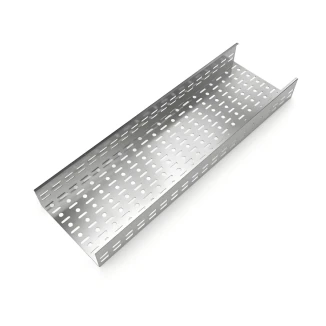
A cable tray is a structural support system designed to hold and organize electrical cables. Instead of hiding cables inside walls or metal conduit, a cable tray provides an open pathway that keeps cables secure while allowing easy access for inspection, maintenance, or future upgrades.
A simple way to think about it is as a highway for cables. Just as roads keep traffic organized and moving efficiently, a cable tray keeps electrical and communication cables neatly arranged throughout a building or industrial facility.
Cable trays are commonly installed overhead, along walls, or beneath ceilings. They support many different types of cables, including:
- Power cables
- Control cables
- Communication cables
- Fiber optic cables
- Network cables
Because the system remains open, technicians can quickly identify, add, or replace cables without removing walls or cutting through conduit. This flexibility makes cable trays a popular choice for commercial and industrial buildings where electrical systems frequently change over time.
Why Not Simply Use Conduit?
Conduit is still widely used, especially for smaller installations or where cables need complete physical protection. However, large facilities often require hundreds of cables running in the same direction. Pulling all of these cables through conduit can be time-consuming and costly.
Cable trays provide a more practical solution for large-scale cable management. They simplify installation, improve airflow around cables, and make future modifications much easier.
For businesses planning to expand or upgrade their facilities, this flexibility can translate into significant savings over the life of the building.
Main Benefits of Using a Cable Tray
A well-designed cable management system offers several advantages:
- Keeps cables organized and easy to identify
- Simplifies routine maintenance
- Speeds up cable installation
- Supports future expansion
- Improves workplace safety
- Helps reduce long-term maintenance costs
- Creates a cleaner and more professional installation
Rather than viewing a cable tray as just another construction component, it’s better to think of it as an investment in a more efficient electrical infrastructure.
Why Are Cable Trays Important for Businesses?
Many business owners don’t think much about cable management until something goes wrong. A damaged cable, unexpected downtime, or a difficult maintenance job can quickly highlight the importance of having an organized system.
Whether you operate a factory, warehouse, office building, hospital, or data center, a cable tray can make day-to-day operations more efficient while reducing long-term costs.
Lower Maintenance Costs
One of the biggest advantages of using a cable tray is easier maintenance.
When cables are neatly organized and clearly visible, technicians can quickly locate the correct cable during inspections or repairs. This reduces the time spent troubleshooting problems and minimizes disruptions to daily operations.
Imagine a manufacturing facility where a production line suddenly loses power. If the electrical cables are hidden inside crowded conduit systems, finding the fault may take hours. With an open cable tray system, maintenance personnel can visually inspect the cable route and identify the problem much faster.
Over the lifetime of a building, these time savings can significantly reduce labor costs.
Improve Workplace Safety
Safety is another major reason businesses invest in proper cable management.
Loose or poorly organized cables can create several risks, including:
- Accidental cable damage
- Overheating caused by poor ventilation
- Difficult emergency repairs
- Trip hazards in certain installations
- Increased fire risk from damaged insulation
Cable trays help reduce these risks by keeping cables properly supported and separated. Their open design also promotes airflow, helping to dissipate heat generated by electrical cables.
Regular inspections become much easier because technicians can see the cables without dismantling the entire system.
Support Future Business Growth
Very few businesses stay exactly the same over time.
You may plan to:
- Add new production equipment
- Expand office space
- Install additional security systems
- Upgrade network infrastructure
- Introduce automation
- Add renewable energy systems
Each improvement usually requires additional electrical or communication cables.
With a cable tray system, adding new cables is often straightforward. Instead of opening walls or replacing existing conduit, technicians can simply route the new cables alongside the existing ones, provided the system has sufficient spare capacity.
This flexibility helps businesses adapt to changing operational needs while avoiding costly renovations.
Improve the Overall Appearance of Your Facility
An organized cable system also creates a cleaner, more professional environment.
Whether customers are touring your factory, investors are visiting your production facility, or inspectors are reviewing your building, neatly managed cables reflect good engineering practices and attention to detail.
For businesses that value operational excellence, proper cable management contributes to a more organized workplace and reinforces confidence in the quality of the facility.
Where Are Cable Trays Commonly Used?
Cable trays are used in almost every industry that relies on electrical power, communication networks, or automation. From small commercial buildings to large industrial plants, they provide a practical way to keep cables organized, protected, and easy to maintain.
Let’s look at some of the most common applications.
Manufacturing Plants and Factories
Manufacturing facilities often contain hundreds of motors, machines, control panels, and production lines. Each piece of equipment requires power and communication cables.
A cable tray system allows these cables to be routed safely throughout the plant while making future modifications much easier. As production lines are upgraded or new equipment is added, technicians can install additional cables without major structural changes.
For factories that operate around the clock, minimizing downtime is essential. Easy access to cables helps maintenance teams identify and resolve issues more quickly, reducing interruptions to production.
Commercial Buildings
Modern office buildings rely on much more than electricity. They also need network cables, telephone systems, security cameras, access control systems, and fire alarm wiring.
Cable trays help organize these different cable types while keeping ceilings, equipment rooms, and service corridors tidy.
Common commercial applications include:
- Office buildings
- Shopping malls
- Hotels
- Hospitals
- Schools and universities
- Convention centers
Because business needs change over time, the flexibility to add or relocate cables is a major advantage.
Data Centers
Data centers contain thousands of network and fiber optic cables connecting servers, switches, and storage systems.
Proper cable management is critical for maintaining airflow, preventing cable congestion, and simplifying maintenance.
Wire mesh cable trays are especially popular in data centers because they provide excellent ventilation and make it easy to route large numbers of lightweight communication cables.
For facilities where uptime is a priority, organized cable routing helps reduce the risk of accidental cable damage during maintenance.
Warehouses and Logistics Centers
Warehouses are becoming increasingly automated. Conveyor systems, barcode scanners, robotic equipment, surveillance cameras, and wireless access points all depend on reliable electrical and communication networks.
Cable trays provide a structured pathway for these systems while allowing businesses to expand as operations grow.
Instead of reinstalling an entire cable network when new equipment is added, technicians can simply extend the existing system.
Energy and Infrastructure Projects
Cable trays are also widely used in large infrastructure projects where reliability is essential.
Typical applications include:
- Power plants
- Solar farms
- Wind energy projects
- Water treatment facilities
- Airports
- Railway stations
- Oil and gas facilities
These environments often require durable materials such as stainless steel, aluminum, or fiberglass-reinforced plastic (FRP) to withstand moisture, chemicals, or outdoor conditions.
Regardless of the industry, the goal remains the same: create a safe, organized, and accessible cable management system that supports long-term operation.
What Types of Cable Trays Are Available?
Not all cable trays are designed for the same purpose. Different environments, cable loads, and installation requirements call for different designs.
Understanding the main types can help you select the most suitable solution for your project.
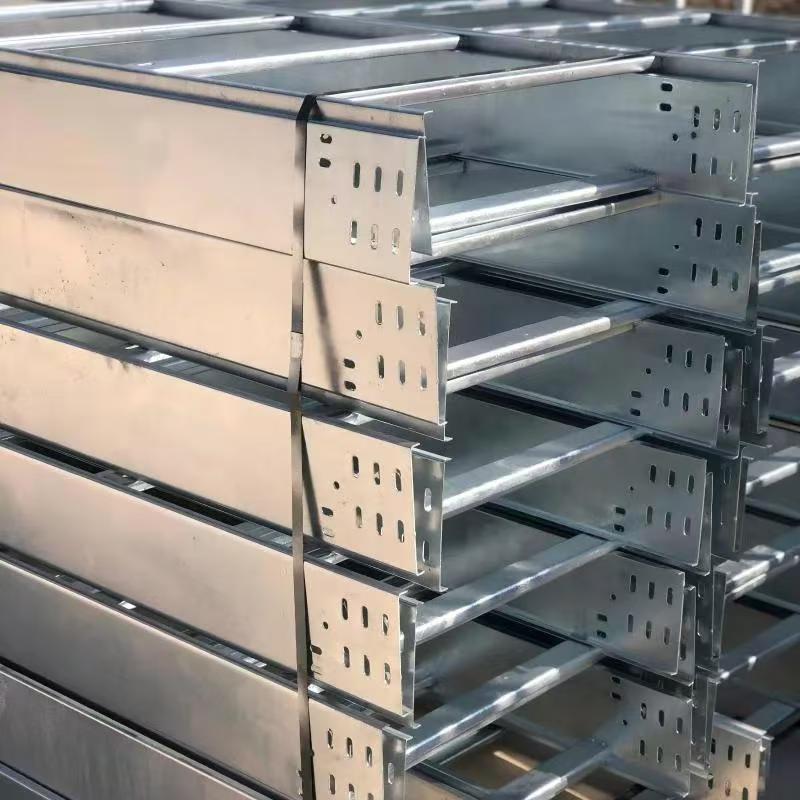
Ladder Cable Tray
A ladder cable tray is one of the most widely used options in industrial facilities.
Its design features two side rails connected by evenly spaced rungs, giving it the appearance of a ladder.
This open structure offers several advantages:
- Excellent airflow to help dissipate heat
- Strong support for heavy power cables
- Easy cable installation and maintenance
- Suitable for long cable runs
Because of its strength and ventilation, ladder cable trays are commonly used in factories, power plants, and heavy industrial facilities.
Best for:
- Heavy-duty electrical cables
- Manufacturing plants
- Energy projects
- Outdoor installations
Perforated Cable Tray
Perforated cable trays have a solid base with regularly spaced holes.
The openings allow air circulation while providing more continuous support than ladder trays.
They are often chosen for commercial buildings because they offer a clean appearance while still allowing cables to be inspected and maintained.
Advantages include:
- Good cable support
- Improved ventilation
- Suitable for mixed cable types
- Neat and professional installation
Best for:
- Office buildings
- Shopping centers
- Hospitals
- Educational facilities
Wire Mesh Cable Tray
Wire mesh cable trays, sometimes called basket trays, are made from welded steel wire.
They are lightweight, easy to cut, and highly flexible, making them a popular choice for communication and network installations.
Because the open mesh design provides outstanding airflow, it is particularly suitable for environments where heat management is important.
Benefits include:
- Lightweight construction
- Fast installation
- Excellent ventilation
- Easy customization on-site
- Ideal for data and communication cables
Best for:
- Data centers
- Server rooms
- Office networks
- Telecommunications facilities
Solid Bottom Cable Tray
Unlike other tray types, a solid bottom cable tray has a continuous base with no openings.
This design provides greater protection against dust, falling debris, and electromagnetic interference in certain applications.
Although ventilation is more limited, solid bottom trays are valuable where cable protection is the primary concern.
Advantages include:
- Better protection for sensitive cables
- Reduced dust accumulation
- Suitable for fiber optic installations
- Improved shielding in specialized environments
Best for:
- Clean rooms
- Laboratories
- Pharmaceutical facilities
- Fiber optic cable systems
Quick Comparison of Cable Tray Types
| Type | Best For | Ventilation | Cable Support | Typical Applications |
|---|---|---|---|---|
| Ladder Cable Tray | Heavy power cables | Excellent | High | Factories, power plants, industrial facilities |
| Perforated Cable Tray | Mixed cable installations | Good | High | Offices, hospitals, commercial buildings |
| Wire Mesh Cable Tray | Data and communication cables | Excellent | Medium | Data centers, server rooms, telecommunications |
| Solid Bottom Cable Tray | Sensitive or fiber optic cables | Limited | High | Laboratories, clean rooms, pharmaceutical plants |
Each design has its strengths, and there is no one-size-fits-all solution.
Not every option is the right fit for every project. The best choice depends on factors such as your installation environment, the type and number of cables, your budget, and your plans for future expansion. Before making a decision, it’s worth understanding the key considerations that will help you select a solution that meets both your current needs and long-term goals.
How to Choose the Right Cable Tray for Your Business
Choosing the right cable tray starts with understanding your project—not just the product. Every building has different electrical requirements, environmental conditions, and future expansion plans. Taking the time to evaluate these factors before purchasing can help reduce installation costs and simplify maintenance for years to come.
1. Consider the Installation Environment
The first question to ask is: Where will the cable tray be installed?
The installation environment has a direct impact on the material and finish you should choose.
For example:
- Indoor office buildings often use galvanized steel because it provides good durability at a reasonable cost.
- Outdoor installations may require aluminum or hot-dip galvanized steel to resist weather exposure.
- Chemical plants or coastal areas benefit from stainless steel or fiberglass-reinforced plastic (FRP), which offer excellent corrosion resistance.
Selecting a material suited to the environment helps extend the service life of the system and reduces long-term maintenance.
2. Estimate Your Cable Load
Next, think about the number and type of cables your project requires.
Will you be supporting:
- Power cables?
- Control cables?
- Communication cables?
- Fiber optic cables?
Heavier power cables require stronger support than lightweight network cables. Choosing the correct tray size and load capacity helps prevent unnecessary stress on the system.
A common industry recommendation is to leave 20–30% spare capacity. This allows room for future upgrades without replacing the entire cable management system.
3. Plan for Future Expansion
Most businesses grow over time.
You might add:
- New machinery
- Additional office space
- Security systems
- Production lines
- EV charging stations
- Solar power equipment
Installing a slightly larger cable tray today is often far more economical than redesigning the entire system later.
Planning ahead gives your business greater flexibility while minimizing future disruption.
4. Choose the Right Material
Different materials offer different advantages.
| Material | Advantages | Typical Applications |
|---|---|---|
| Galvanized Steel | Strong, affordable, suitable for indoor use | Commercial buildings, warehouses |
| Aluminum | Lightweight, naturally corrosion-resistant | Outdoor installations, rooftops |
| Stainless Steel | Excellent corrosion resistance | Food processing, marine, chemical plants |
| FRP (Fiberglass-Reinforced Plastic) | Resistant to chemicals and moisture, non-conductive | Industrial plants, wastewater facilities |
The right choice depends on your operating environment, budget, and maintenance expectations.
5. Work with an Experienced Supplier
A reliable supplier does more than provide products. They can also help you choose the appropriate tray type, dimensions, accessories, and finishes for your application.
When comparing suppliers, consider:
- Product quality
- Manufacturing standards
- Available certifications
- Customization options
- Technical support
- Delivery times
- After-sales service
A knowledgeable supplier can help you avoid costly mistakes during installation.
Cable Tray vs. Conduit
Both cable trays and conduit protect electrical cables, but they serve different purposes.
The table below highlights the key differences.
| Feature | Cable Tray | Conduit |
|---|---|---|
| Installation | Faster for large cable runs | More time-consuming |
| Maintenance | Easy cable access | Cables enclosed, harder to inspect |
| Future Expansion | Simple to add new cables | Often requires additional conduit |
| Cooling | Better airflow | Limited ventilation |
| Best For | Commercial and industrial facilities | Small installations or exposed wiring requiring extra protection |
For large buildings and industrial projects, cable trays often provide greater flexibility and lower maintenance costs over the long term.
Frequently Asked Questions
What is a cable tray used for?
A cable tray supports and organizes electrical, communication, and data cables. It provides a structured pathway that keeps cables accessible for installation, maintenance, and future upgrades.
What are the main types of cable trays?
The most common types are ladder cable trays, perforated cable trays, wire mesh cable trays, and solid bottom cable trays. Each is designed for different cable loads, environments, and installation requirements.
Is a cable tray better than conduit?
Neither is universally better. Conduit offers greater physical protection for individual cable runs, while cable trays are typically more practical for projects involving large numbers of cables and future expansion.
Can cable trays be installed outdoors?
Yes. Outdoor installations typically use materials such as aluminum, hot-dip galvanized steel, stainless steel, or FRP to withstand weather and corrosive environments.
How long does a cable tray last?
Service life depends on the material, environment, and maintenance. In suitable conditions, a properly selected and installed cable tray system can remain in service for several decades.
Conclusion
As businesses continue to rely on more electrical equipment, automation, and digital infrastructure, effective cable management becomes increasingly important.
A cable tray offers a practical way to organize and support electrical cables while making installation, maintenance, and future expansion much easier. Whether you’re managing a warehouse, manufacturing plant, office building, hospital, or data center, selecting the right cable management system can improve safety, reduce maintenance costs, and help protect your long-term investment.
There is no single solution that fits every project. The best choice depends on your environment, cable requirements, budget, and future growth plans. By understanding the different tray types and materials available, you can make a more informed purchasing decision and build an electrical infrastructure that remains reliable for years to come.
Ready to Find the Right Cable Tray Solution?
Whether you’re planning a new construction project, expanding an existing facility, or upgrading your electrical infrastructure, choosing the right cable tray is an important investment.
Our experienced team can help you select the most suitable solution based on your application, operating environment, and project requirements.
Contact us today for expert advice, customized cable tray recommendations, and a competitive quotation. We’re here to help you build a safer, more organized, and future-ready cable management system.